The Best Home Decor Trends for 2025: What's Actually Worth Adopting
Every year, interior design publications announce the trends of the moment, and every year, a mix of genuinely exciting ideas arrives alongside recycled concepts and marketing-driven "trends" that amount to little more than product pushes. Here's an honest guide to 2025's most interesting directions — what's worth adopting, what to avoid, and how to test any trend in your actual room before committing to it.
Trends Worth Adopting
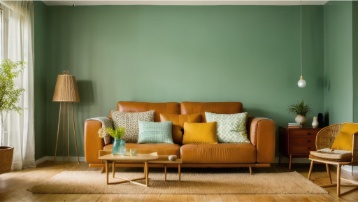
Warm minimalism is the evolution of the cold, stark minimalism of the 2010s. Where early minimalism emphasized white walls, bare surfaces, and a kind of aesthetic asceticism, warm minimalism adds texture, natural materials, and earthy color. Think linen sofas in oatmeal tones, terracotta accents, aged wood, and boucle throws. The underlying principle — fewer, better things — remains, but the emotional register shifts from austere to inviting. This is a trend worth adopting because it has genuine staying power. It's rooted in the same principles as Scandinavian and Japandi design, which have proven remarkably durable.
Biophilic accents represent a maturation of the houseplant trend. Where the previous wave was about adding as many plants as possible, the 2025 approach is more considered: a few well-chosen plants as deliberate design elements, alongside natural materials (rattan, jute, stone, unfinished wood) and earthy palette choices that reference the natural world. The psychological benefits of biophilic design are well-documented — natural elements measurably reduce stress and improve mood — which gives this trend substance beyond aesthetics.

Earthy palettes are replacing the gray-dominated interiors of the 2010s with warmer, richer tones: terracotta, warm rust, sage green, mushroom, warm sand, and deep clay. These colors work across styles — from bohemian to minimalist to mid-century modern — and they photograph beautifully in natural light. Unlike gray, which reads as cold and trendy in hindsight, earthy tones have centuries of use in design and architecture behind them. They tend to age well.
Bouclé textures continue from 2024 but show no sign of fading. The loopy, textured fabric used in everything from sofas to accent chairs to throw pillows adds warmth and tactile interest without visual noise. It works particularly well in neutral palettes where texture is the primary design tool. If you've been waiting to try bouclé, 2025 is still a valid time to invest.
Limewash walls represent one of the more dramatic shifts in 2025 interior design. The Old World technique — applying layers of lime-based paint for a softly mottled, ancient-feeling finish https://telegra.ph/How-to-Create-a-Cohesive-Interior-Design-Throughout-Your-Home-05-13-2 — has crossed from boutique design projects into mainstream adoption. Limewash adds depth and character to walls in a way that flat or eggshell paint simply cannot replicate. It works particularly well in earthy palettes and in spaces where texture-led design is the goal.
Trends to Skip
All-white kitchens had an extraordinary run from roughly 2010 to 2022, but the look has reached oversaturation. White cabinets, white countertops, and white subway tile is a combination so common it has stopped reading as a design choice and started reading as a default. Beyond the cultural exhaustion, all-white kitchens are demanding to maintain — every stain, every fingerprint, every cooking splatter is visible. The trend is moving toward warm-toned cabinets (sage, warm greige, deep navy), stone countertops with movement, and more varied tile shapes.
Farmhouse exhaustion is real. The shiplap-and-barn-door aesthetic, popularized through a decade of home renovation television, has been applied to so many spaces across so many contexts that it has lost whatever authenticity it once had. Original farmhouse design was rooted in the authentic vernacular of rural American architecture — it wasn't a style kit sold at big-box stores. The trend has peaked and is retreating.
How to Test Trends in Your Actual Room Before Committing
The fundamental problem with interior design trends is that what looks beautiful in a magazine photo or on a design blog may look completely wrong in your specific room, with your specific proportions, your specific light, your specific existing furniture. The solution is to test trends visually before committing to them.
AI room design tools make this possible. Upload a photo of your room to AI Room Decor, select the style or trend direction you're considering, and receive multiple visualizations showing what your actual room would look like with the trend applied. Want to know if limewash walls work in your living room? Test it. Considering a bouclé sofa in warm white? See it in your space before buying. Wondering if the earthy palette suits your room's natural light? Visualize it first.
This approach eliminates the most common and expensive trend mistake: adopting a trend based on how it looks in someone else's room, only to discover it doesn't translate to yours. Your room has specific constraints — window placement, ceiling height, existing architectural features — that determine which trends will enhance it and which will fight it. AI visualization shows you the answer before the credit card comes out.
The guiding principle for navigating trends remains the same regardless of which specific trends are current: adopt what genuinely serves your space and your life, ignore what's merely fashionable, and use the tools available to test before committing. In 2025, those tools are better than they've ever been.